PHASE 01
Make the system consistent and noticeable
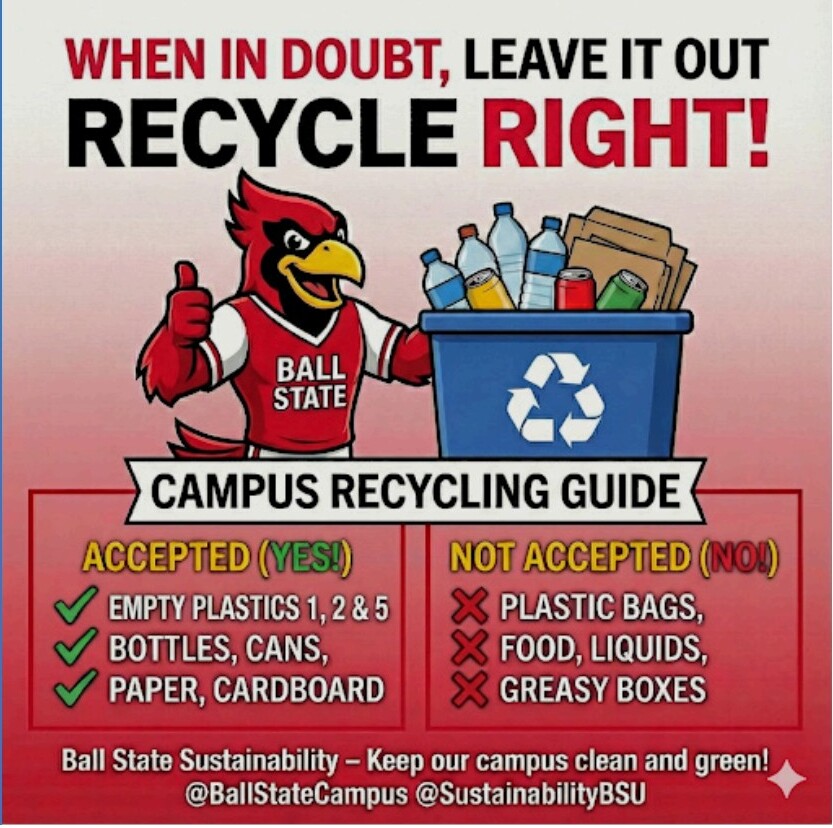
Roll out the bin wrap and the When-in-doubt sign campus-wide. Align the five visual systems into one. Reduce contamination by aligning student mental models with the actual processing rules.
DESIGN RESEARCH · SERVICE DESIGN
Design Process → 01 Research → 02 Define → 03 Ideate → 04 Prototype → 05 Test → ↺ Iterate
A human-centered investigation co-authored with Ava Monroe and Femi Osholake for EMDD 620, Empathy Research at Ball State University. The brief diagnoses why participation is low and contamination is high, then proposes a redesigned signage and bin system that makes the right choice the obvious one.
Role
Co-researcher · empathy immersion · stakeholder interviews · synthesis · prototyping · brief authorship
Team
Ava Monroe · Elizabeth Kugbey · Femi Osholake
Methods
Secondary research · observation · empathy immersion · interviews · card sorting · I Like / I Wish / I Wonder
Course
EMDD 620 · Empathy Research · Ball State University
▸ A note on method
Ball State has made notable investments in sustainability, yet the recycling system on campus remains inconsistent, confusing, and underutilized, especially among students, who generate the majority of campus waste. We set out to understand why a campus with public sustainability commitments still struggles with low participation and high contamination. The answer, it turned out, was not a missing bin. It was a missing system.
Step 01
Empathy · Research
We layered five methods on top of one another so no single voice — student, administrator, custodian — could overstate the problem alone. Secondary research gave us the policy and peer-institution context (NYU's student-run Swap Shops, the University of Georgia's Smart Bins, Orange Coast College's scholarship-funded recycling center). Observation sessions in dining halls, the recreational centre, the student centre, classrooms, parking lots, walkways, and apartment complexes gave us the behavior. Empathy immersion — moving through campus as a student trying to recycle — gave us the friction in our own hands.
Structured interviews with stakeholders, including Chief Sustainability Officer Margaret Lo, gave us the systemic constraints: single-stream recycling with a 10% contamination tolerance, and a processing partner that can only handle plastics 1, 2, and 5. And design-thinking sessions with nine Ball State students (card sorting, empathy mapping, "I Like / I Wish / I Wonder") gave us the mental models students arrive with, which almost never match the system they walk into.
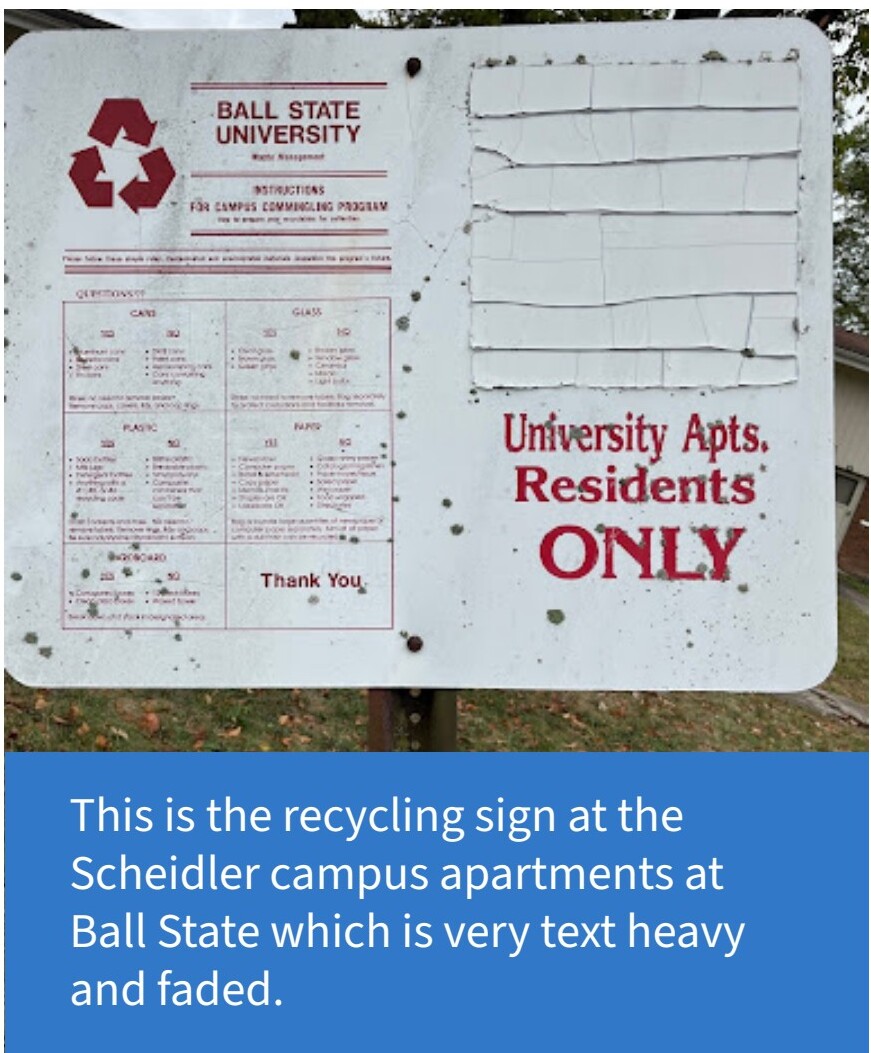
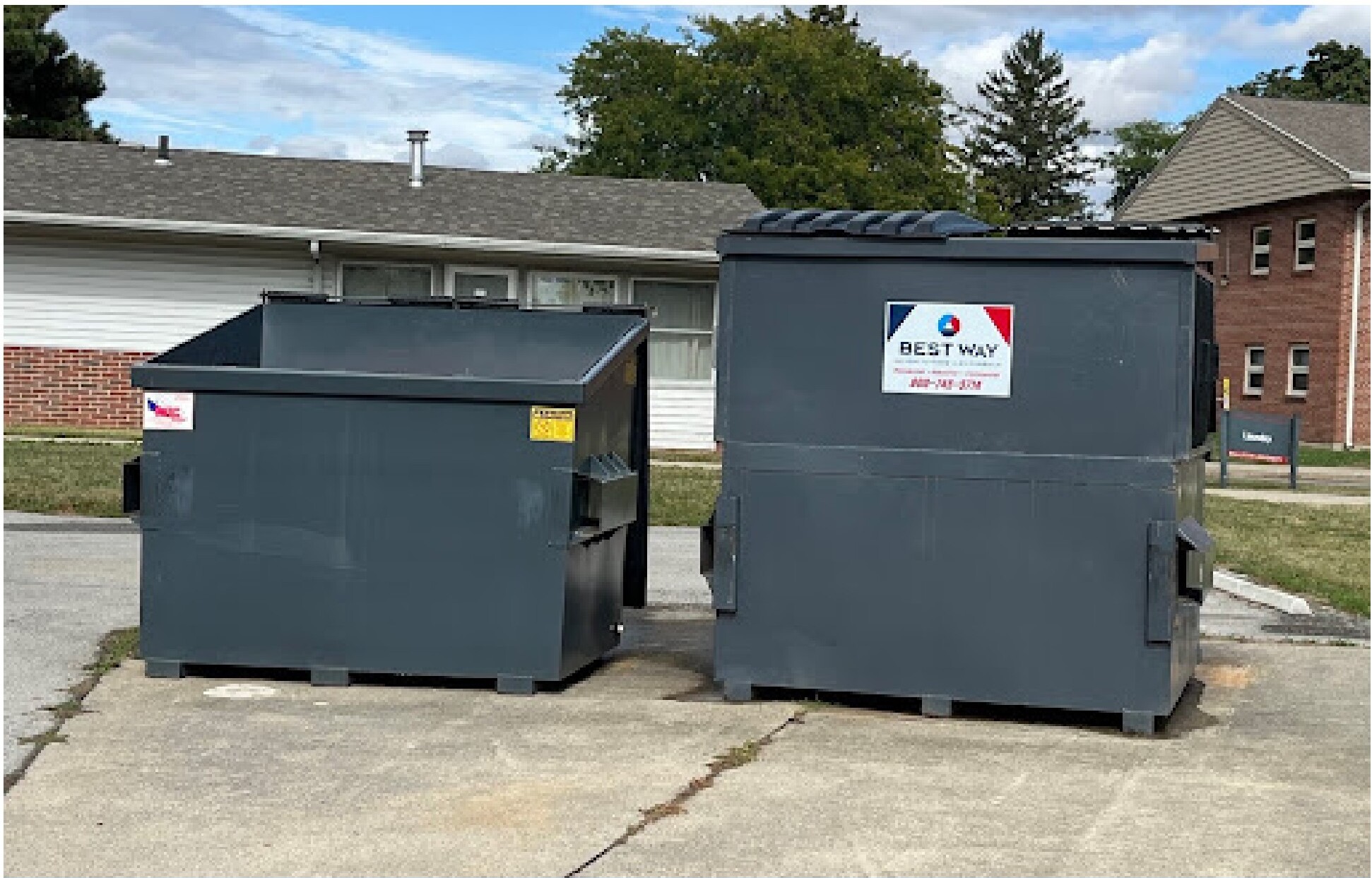
Left: the recycling sign at Scheidler apartments — text-heavy, faded, mounted out of sight. Right: the dumpsters that sign is supposed to explain.
Step 02
Define
Our synthesis kept returning to one sentence: students at Ball State often avoid recycling not out of apathy, but because the system requires too much effort to understand and doesn't show whether recycling actually makes a difference. Three themes carried that sentence.
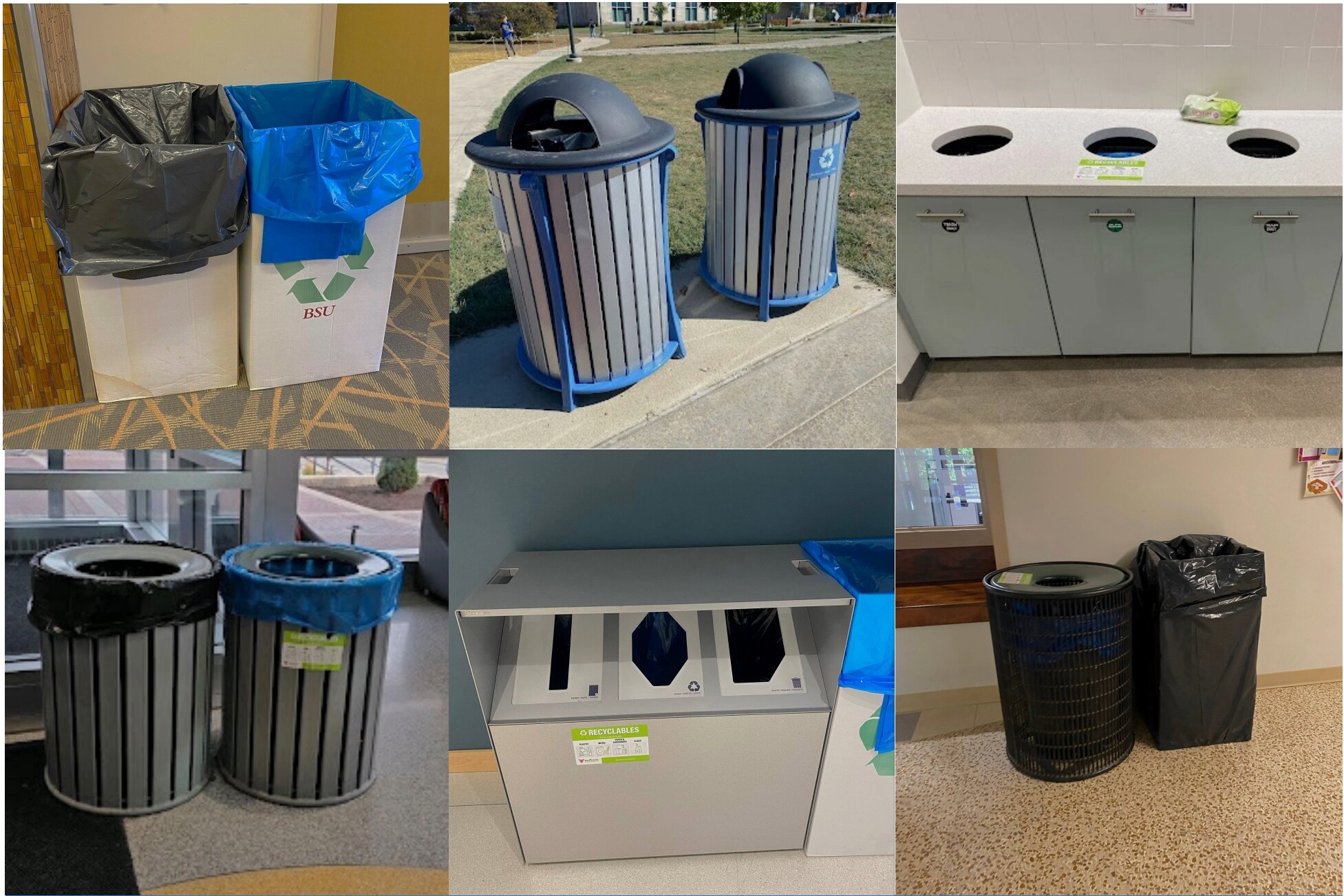
Six bins. One campus. The visual inconsistency is the message.
Step 03
Ideate
We facilitated a brainstorming and ideation session with nine Ball State students to surface what they wanted the system to do, not what we assumed it should do. Stakeholder design sessions returned a clear pattern: students want recycling to feel integrated into campus culture, not bolted on. They want gamification, visible impact, and incentives. They want to see their actions land somewhere.
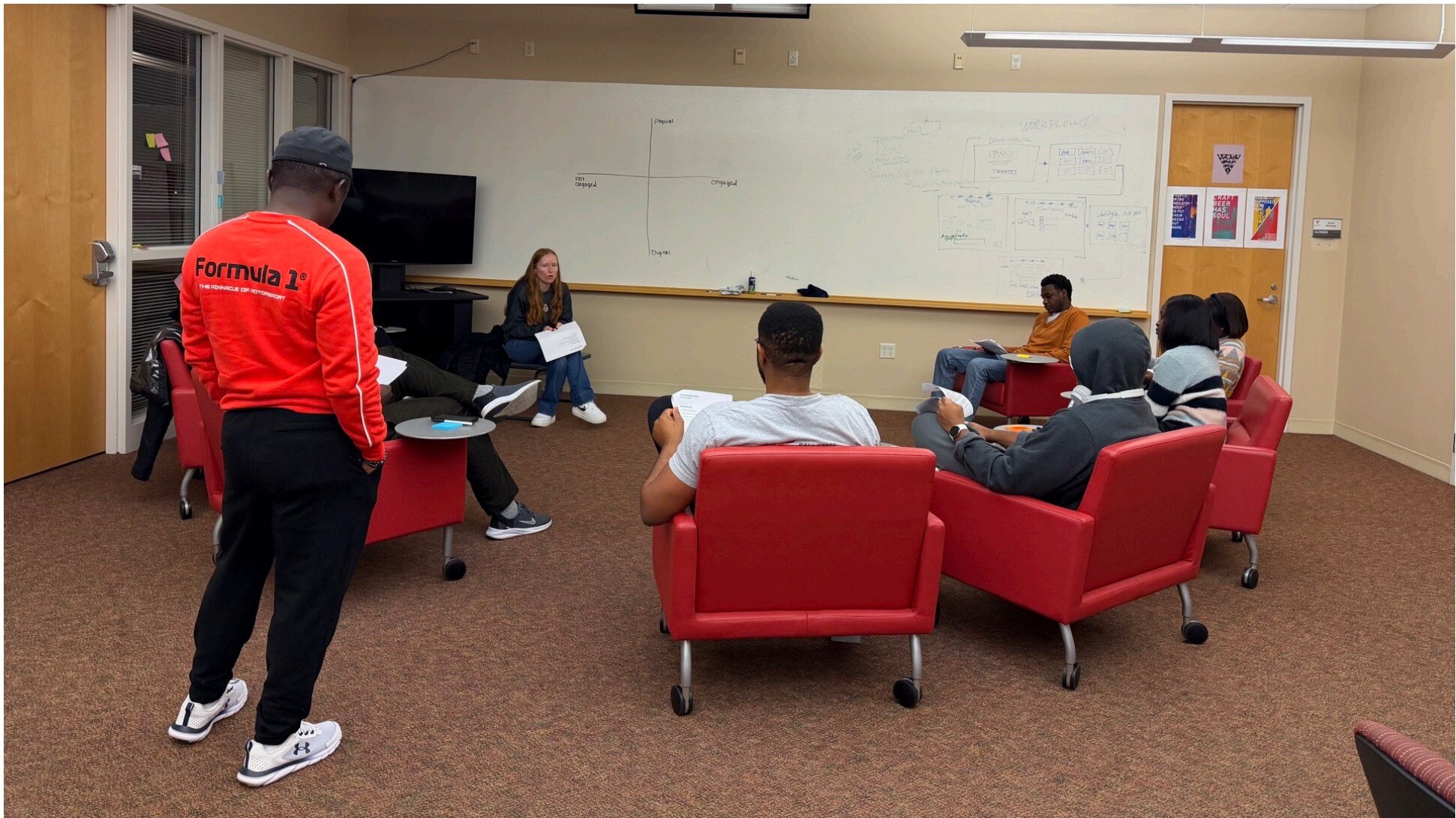
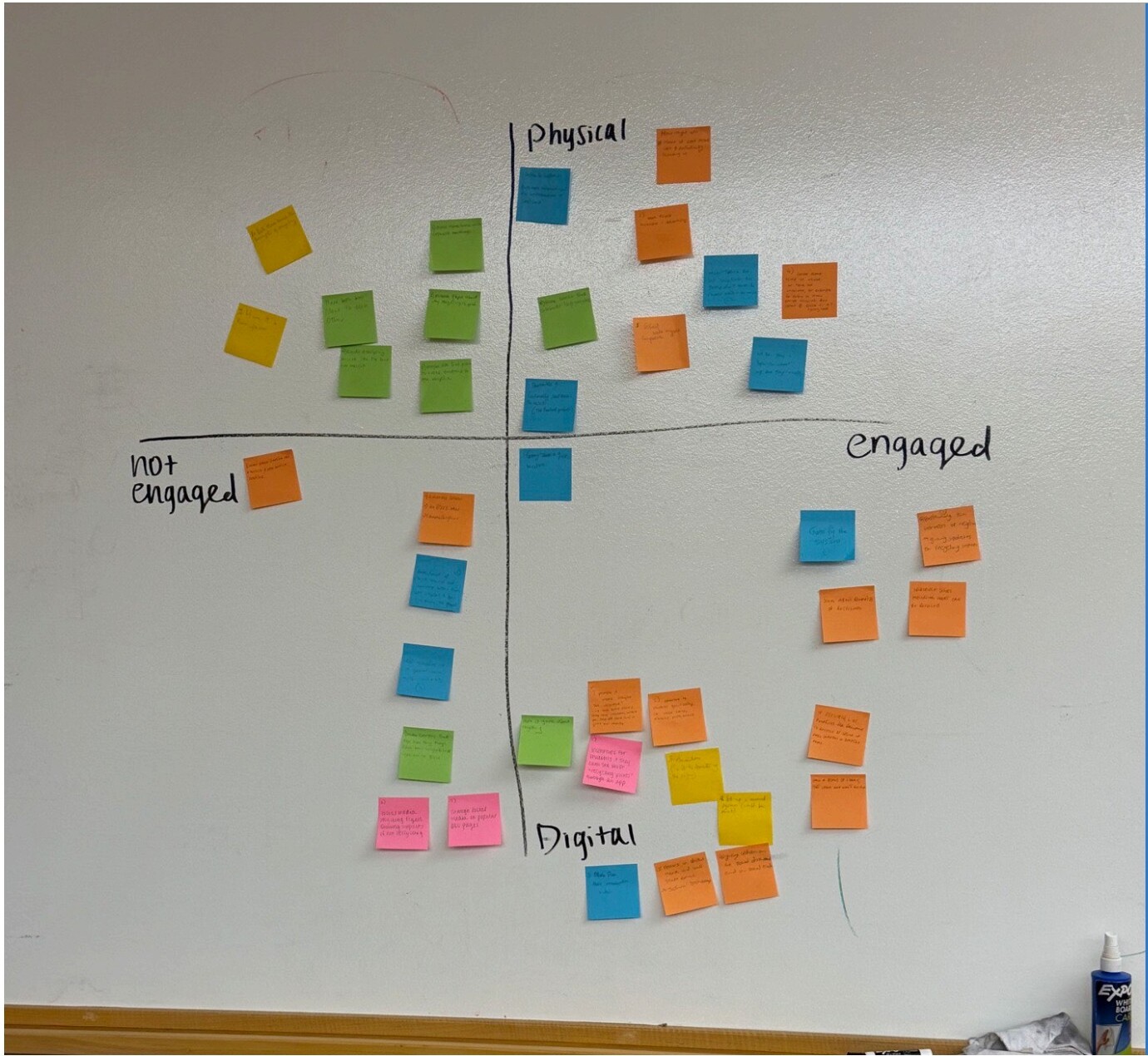
From dozens of post-its we built a four-step long-term roadmap: first make the bins, signage, and language consistent; then launch educational outreach using the campus's existing digital boards and sidewalk infrastructure; then surface results back to students; and only then introduce campus-wide competitions and incentives. Skipping ahead to gamification, without first fixing the inconsistency, would just gamify confusion.
Step 04
Prototype
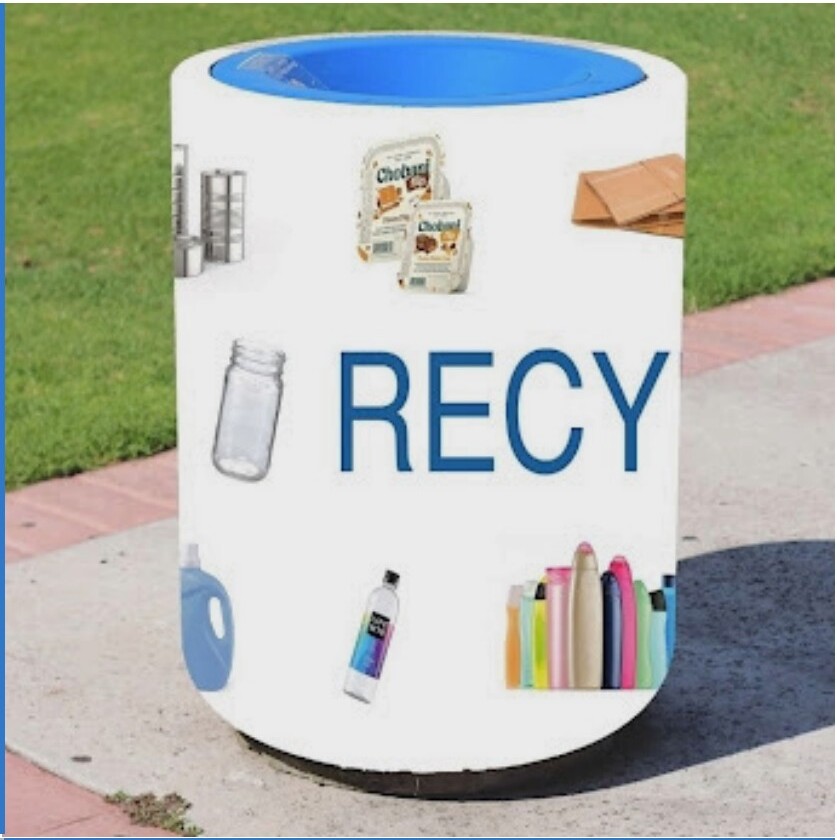
We prototyped three context-specific bin wrap designs — for classrooms, dorms, and dining halls — each one printed with images of the recyclable items that environment actually produces. Glass jars and shampoo bottles on the dorm bin. Energy-drink cans and yogurt containers on the dining-hall bin. The bin body stays white so the images do the work, the lid and text stay blue because blue already reads as recycling, and "Recycle Here!" sits across the top opening, where the decision happens.
Step 05
Test
We evaluated the bin-and-signage intervention with card sorting before and after exposure to the prototype, and behavioral observation at pilot bins. The intervention increased correct recycling behavior compared to baseline observations and reduced visible contamination at the test locations. More importantly, students reported greater confidence in their recycling decisions — the trust gap, narrowing.
None of this required new infrastructure. It required the existing infrastructure to explain itself.
↺ Iterate · the long-term plan
PHASE 01
Roll out the bin wrap and the When-in-doubt sign campus-wide. Align the five visual systems into one. Reduce contamination by aligning student mental models with the actual processing rules.
PHASE 02
Use the existing digital boards, posters, and sidewalk stickers, modeled on the visibility of campus 988 suicide-prevention materials, to drive awareness and connect contamination to students' daily lives.
PHASE 03
Surface real recycling numbers at events and on the digital boards. The number-one ask in our research was transparency. Visible impact is what dissolves the distrust.
PHASE 04
Departments and colleges compete on a digital-board leaderboard with a thermometer toward a shared goal. Rewards (lunch vouchers, parking passes) are real because the consistent system underneath finally makes the data trustworthy.
This brief gives Ball State and its partners a roadmap to align infrastructure, communication, and student experience into a more coherent, human-centered recycling system — built from the ground up out of student voices, stakeholder constraints, and the literature on the value–action gap.
More work